Ask a simple question inside most businesses:
Who owns your IT?
Not who supports it. Not who fixes tickets. Who actually owns it end-to-end.
The answer is usually… unclear.
And that uncertainty is quietly expensive.
"Someone Else Is Handling It" Is Not Ownership
In a lot of organisations, IT lives in the gaps.
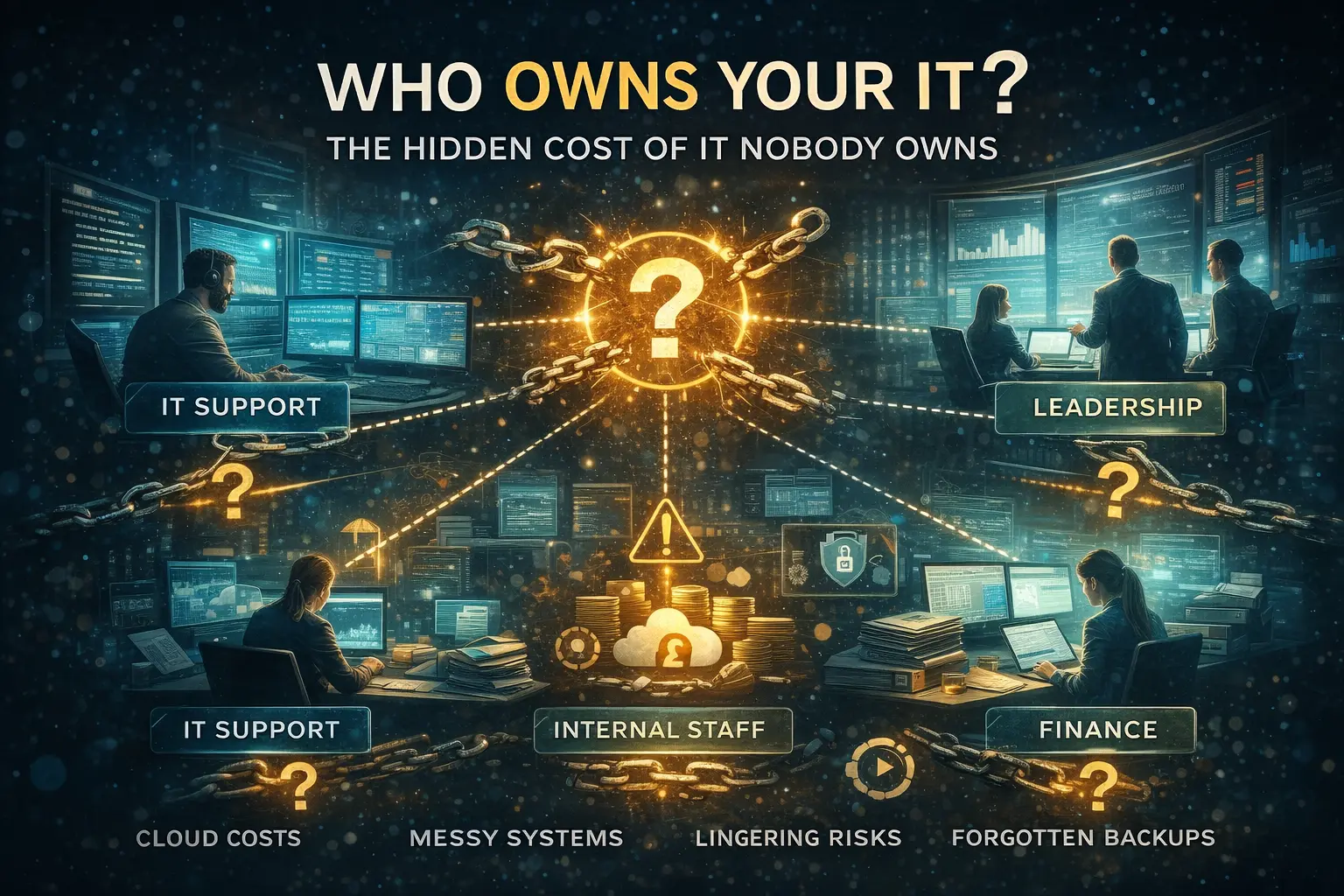
The MSP looks after the servers. Internal staff manage day-to-day issues. Finance pays the invoices. Leadership assumes it's under control.
Everyone touches it. No one owns it.
So systems drift.
Microsoft 365 tenants grow messy. Cloud resources get spun up and forgotten. Security tools are licensed but rarely reviewed. Backups exist, but nobody remembers when they were last tested.
Nothing is broken enough to trigger action. Everything is inefficient enough to cost money.
The Quiet Costs Add Up
The problem with unowned IT isn't that it fails. It's that it bleeds.
It shows up as:
Cloud bills with line items nobody can explain Security policies that exist but aren't enforced Tools that overlap because nobody audited them Projects slowed because systems feel fragile One person who "knows how it works" and everyone else avoids touching it
These aren't dramatic failures. They're friction. And friction compounds.
By the time leadership notices, the cost isn't in one place. It's spread across wasted time, delayed decisions, duplicated tools, and creeping risk.
Why This Matters More in 2026
A few years ago, this was annoying but survivable.
In 2026, it's a problem.
Businesses are facing tighter scrutiny around:
Cost control Energy usage Business resilience Security posture Sustainability claims
UK 2030 and Portugal 2030 targets aren't theoretical anymore. They're shaping funding access, compliance expectations, and how partners and regulators judge digital maturity — even for SMEs.
When IT has no clear owner, it's almost impossible to answer basic questions:
What are we actually paying for? How efficient is our infrastructure? Can we recover if something goes wrong? Are we wasting energy and resources?
"No idea, but it works" is no longer an acceptable answer.
Unowned IT Is Bad for Sustainability Too
Green IT isn't about slogans. It's about intent.
When nobody owns IT:
Cloud resources run constantly instead of efficiently Old hardware stays in service because replacement feels risky Systems aren't measured, so waste stays invisible Energy usage isn't optimised, just tolerated
Sustainability requires visibility. Visibility requires ownership.
You can't meaningfully reduce your footprint if you don't know what you're running, why it exists, or who's responsible for it.
The Cost You Don't See Is the One That Hurts
If nobody owns your IT, you're already paying for it. Just not in one clean line on a balance sheet.
You're paying in:
Lost momentum Hidden inefficiencies Unmeasured energy use Growing risk Decisions delayed because systems feel fragile
2026 is the year this stops being invisible.
The businesses that move forward are the ones that stop asking, "Is IT working?" and start asking, "Who actually owns this — and where is it taking us?"